
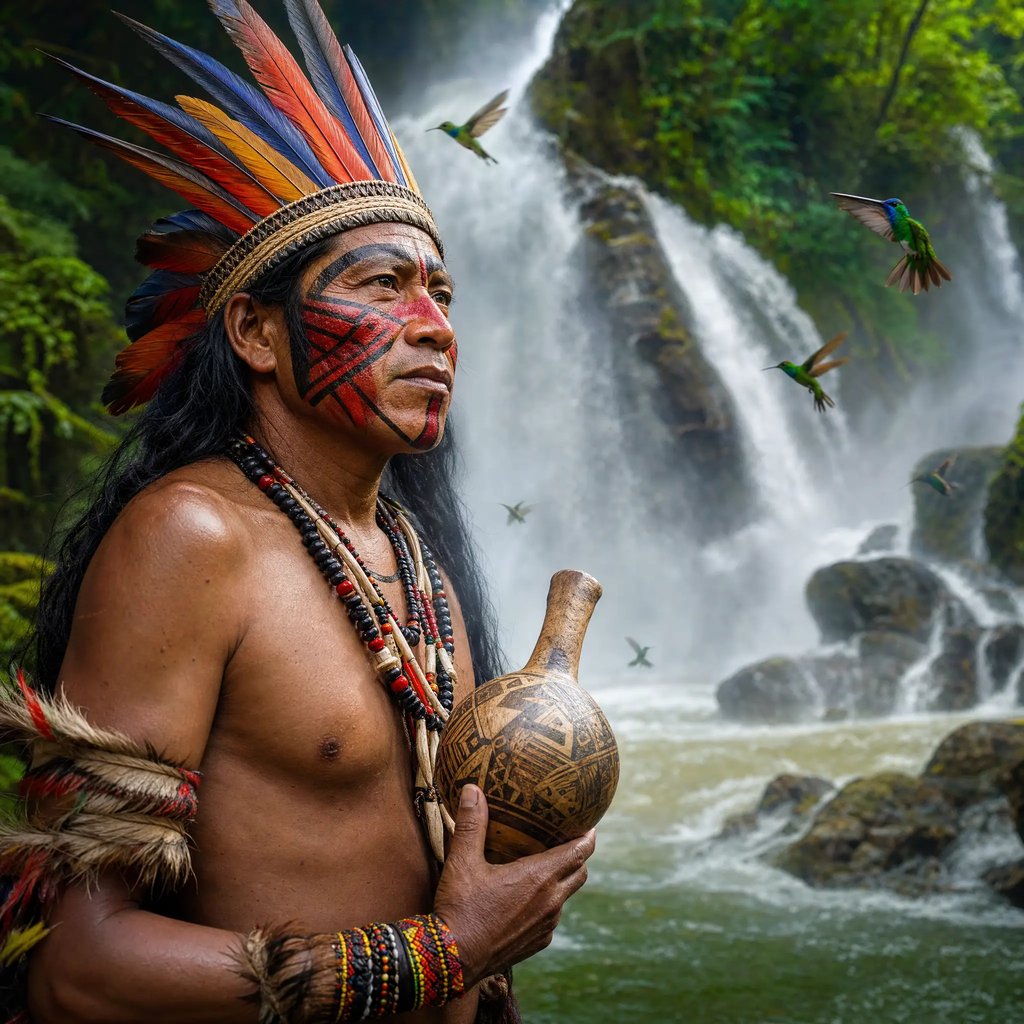
Shamans of Ecuador

Morona Santiago · the people of the waterfalls

The Shuar uwishín

One of the most studied shamanic cultures on Earth — and one of the most guarded. The Shuar healer works with the natem vine and a vision that is not spoken about to outsiders.

The Shuar uwishín

The people of the eastern jungle

The Shuar live in the south-central Amazon of Ecuador — Morona Santiago and Zamora Chinchipe — and are closely related to the Achuar and Shiwiar. Their healer-shaman is the uwishín. Shuar shamanism is among the most studied in lowland South America, and several of its features are famous — and frequently misunderstood — outside Ecuador.

Natem — the vine of vision

Natem is the Shuar name for the ayahuasca brew, prepared from the vine Banisteriopsis caapi, often with companion plants. It is central to Shuar vision and healing: the ceremony is led by the uwishín, and the vine is understood as a teacher through which diagnosis and song arrive.

Arutam — the guarded vision

Arutam is understood as the spirit-power of a deceased eminent ancestor. Through austerity, strict diet and the taking of natem and tobacco preparations — traditionally in solitude at a sacred waterfall — a person seeks the vision of Arutam, which may appear as a jaguar, an anaconda or another powerful being, and which confers power, courage and foresight. Ethnographers are explicit that the arutam tradition is deliberately opaque: much of it is not shared with outsiders, and every outside description should be treated as partial. That opacity is not a gap in the record. It is the record working as intended.

The tsantsa, told honestly

Historically a warrior society, the Shuar practiced the ritual shrinking of an enemy's head — the tsantsa — to contain or neutralize its avenging soul. The practice was rare and deeply ritualized. Then, around 1860, a commercial fever for shrunken heads among outside collectors created a market that distorted and expanded what had been a contained practice. Head-shrinking has essentially ceased. Historical tsantsas survive in museum collections, where their presence raises ongoing questions of repatriation and ethics. The right way to tell this story is factually, without sensationalism.

The plants of the uwishín

  • ◆Natem, the ayahuasca vine at the center of vision and healing
  • ◆Mapacho, the protector tobacco of Amazonian ceremony
  • ◆The forest plants of the eastern foothills, gathered for cleansing and treatment

How the knowledge is kept

The arutam quest is the initiation: austerity, solitude, water and the vine. Beyond it, knowledge passes from uwishín to apprentice over years, much of it deliberately unwritten. Today there are organized networks — a Consejo de los Uwishin Shuar — working to formalize and protect what has always been guarded by silence.

Approach with respect

The Shuar world rewards patience and correct introduction. Start with a free 20-minute call and we will tell you honestly what is possible, what is appropriate, and who to sit with.

Book a free navigation call

Educational and coordination service only. Not medical advice, and not a substitute for a qualified healthcare professional.