
Shamans of Ecuador

Loja · the black-clad people of the south

The Saraguro curanderos

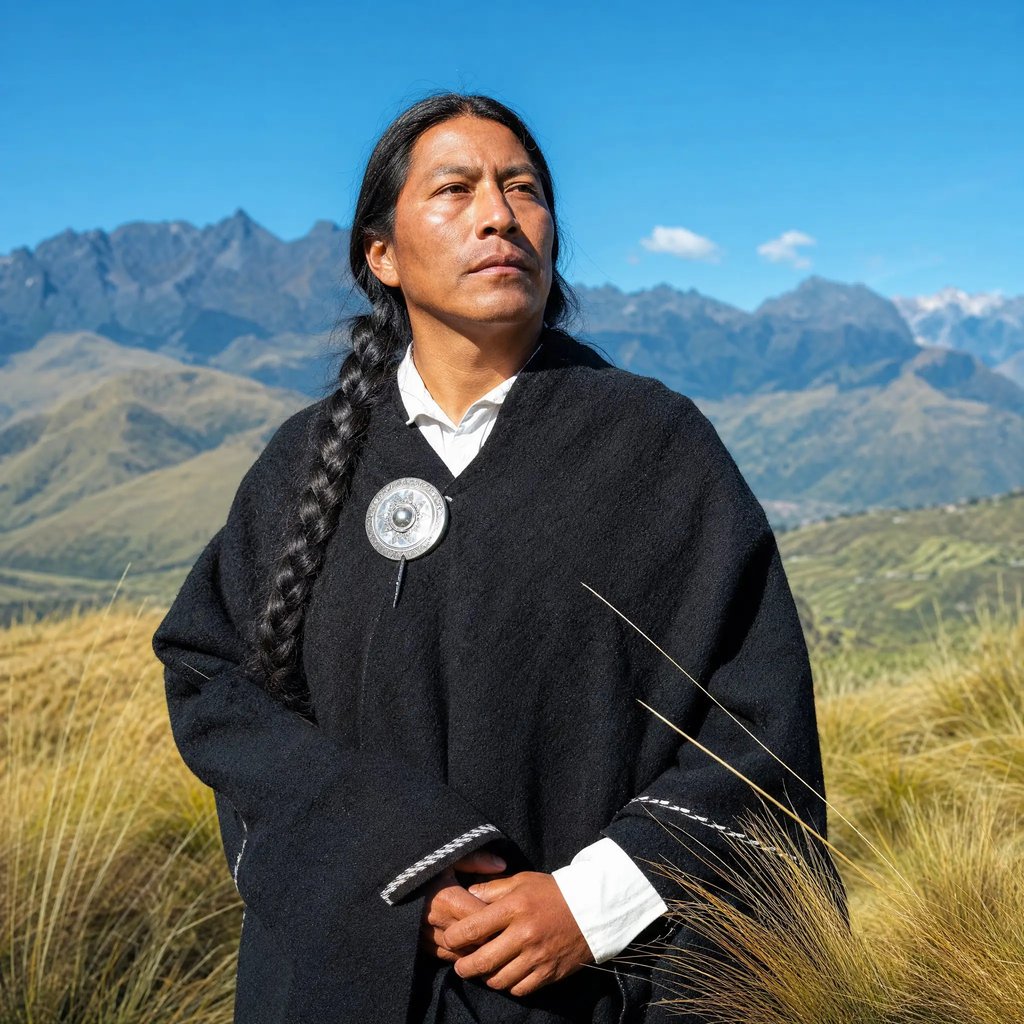
A people whose dress has not changed in centuries and whose reputation as healers reaches far beyond Ecuador. Their medicine is quiet, plant-centered and mountain-cold.

The Saraguro curanderos

The people of the southern Andes

The Saraguro are a Kichwa people of Loja in Ecuador's far south, instantly recognizable by their unchanged dress: black wool, white shirts, long braided hair and the silver tupo pin. They are famous as travelers — Saraguro families live and work across Ecuador and beyond — and as healers, a reputation that has traveled as far as their people have.

The curandero's work

The Saraguro curandero works with the plants of the southern highlands, with cleansing eggs and flowers, and with the cold of the mountain itself. Limpias — ritual cleansings — are the everyday work: for fright, for envy, for the heaviness that Andean medicine reads in the body. The garden beside the house is, as in Imbabura, the laboratory.

Healers who travel

Saraguro healers appear in the academic record as named, practicing figures — community practitioners rather than celebrities. That is exactly the point: the Saraguro tradition is a living, working one, carried by people whose names stay close to their communities while their reputation carries the tradition's name across the Andes.

The plants of the southern heights

  • ◆Andean garden herbs, the foundation of the curandero's cleansing work
  • ◆San Pedro, worked in the highland manner
  • ◆Flowers, eggs and mountain water for the limpias

How the knowledge is kept

Within families, over years, in full view of the community — and by the discipline of the dress itself. When a people keeps its clothing unchanged for centuries, it is a statement about what else it intends to keep.

Meet a Saraguro healer

The southern Andes are far from the tourist trail — and that is part of their honesty. Start with a free 20-minute call and we will introduce you properly.

Book a free navigation call

Educational and coordination service only. Not medical advice, and not a substitute for a qualified healthcare professional.