Shamans of Ecuador

Napo & Pastaza · the river people

The Kichwa yachak — the one who knows

The largest indigenous people of the Ecuadorian Amazon keep a healer whose title means 'one who knows' — and who spends a lifetime earning the right to that word.

The Kichwa yachak — the one who knows

The largest people of the Amazon

The Amazonian Kichwa — Napo Runa along the Napo river and the Kichwa of Pastaza to the south — are the largest indigenous population of the Ecuadorian Amazon. Their political tradition is as strong as their healing one: the historic Plan Amazanga of the 1990s framed the concept of sumak kawsay, good living, which later entered Ecuador's constitution and national discourse. The healers of these river communities belong to that same worldview: the forest is alive, and a human being is one part of it.

What a yachak does

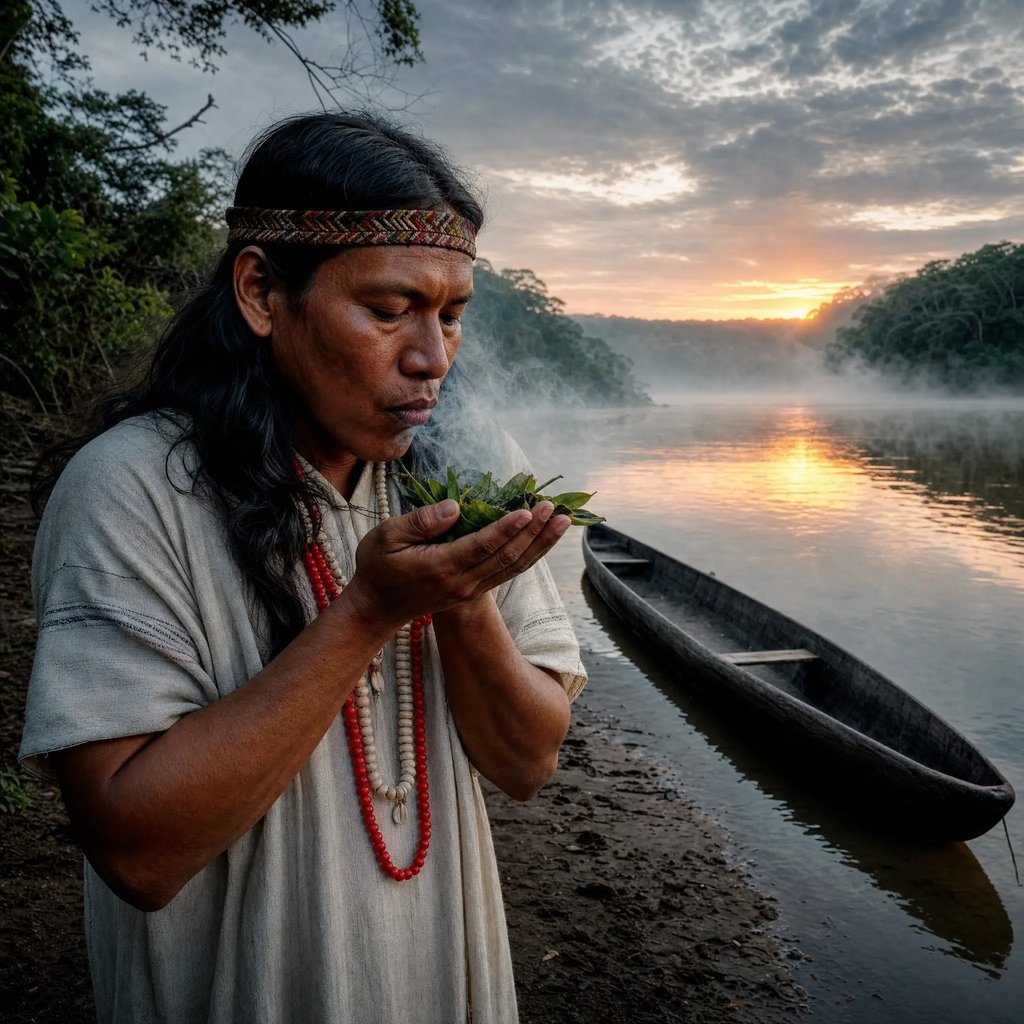
The word yachak comes from yachay — to know. The role is broad because the person is broad: herbalist, diagnostician, ritual cleanser, singer and community authority in one. A yachak performs limpias, cleansing ceremonies with bundles of plants and smoke; reads illness in the body, the dreams and the water; and sings the long healing songs of the river. In academic descriptions the role is summarized as several medical specialties combined into a single person.

Learning between worlds

Initiation is long and personal. A student works under an established yachak for years — learning plants, cleansing, song and ceremony by doing, not by reading. Recent scholarship on the Kichwa of Santa Clara, Pastaza, describes the process as ontological: the initiate learns to move between worlds, and to hold authority in ancestral medicine. It is not a course. It is a transformation, and the community watches it happen over years.

The plants of the river world

  • ◆Guayusa, the pre-dawn tea whose ritual is built around reading the night's dreams
  • ◆Mapacho, the protector tobacco, blown as cleansing smoke over people and spaces
  • ◆The forest's own pharmacy — dozens of wild plants gathered for limpias, baths and remedies
  • ◆Ayahuasca, worked as a teacher plant in the regions where the river traditions hold it

How the knowledge is kept

By apprenticeship, by dietas in the forest with single plants, by dreams — and by family. Many yachak lineages pass within families along recognized lines, which is why certain healing roles belong to certain communities. The songs themselves are understood to arrive in dreams, and the teacher's work is to help the student read them.

Sit with a yachak

If the river tradition is calling you, start with a free 20-minute call. We will match you honestly with a vetted practitioner and stand beside you the whole way.

Book a free navigation call

Educational and coordination service only. Not medical advice, and not a substitute for a qualified healthcare professional.