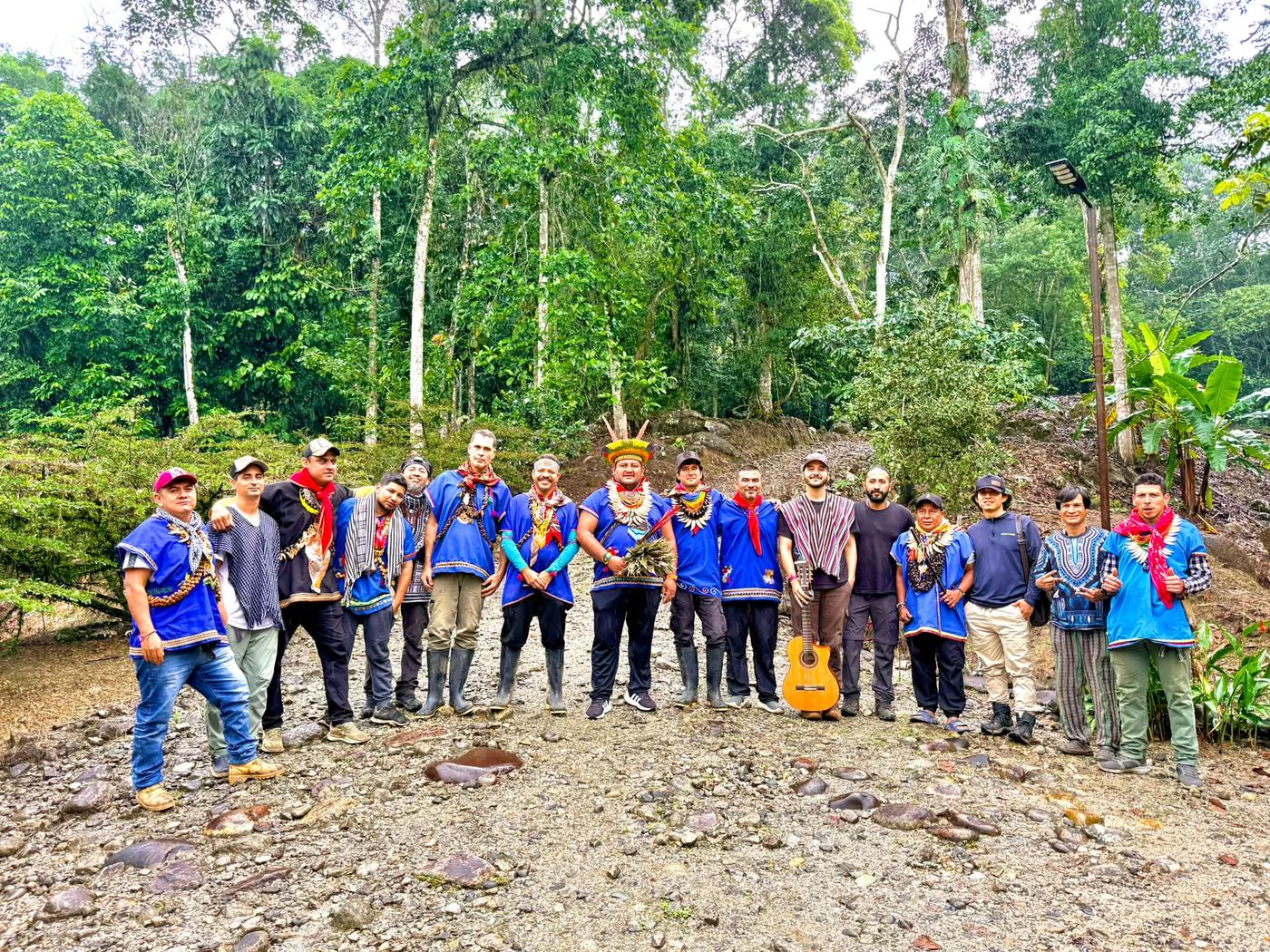
Shamans of Ecuador
The Cofán of the Putumayo

A'i — the true people

The Cofán of the Putumayo

A people who survived the darkest chapter of the rubber boom, kept the yagé ceremony singing through all of it, and today guard the headwaters of one of the most biodiverse forests on Earth.

The story

Every word of this page is about survival. The Cofán call themselves A'i — the true people. Their language, A'ingae, is spoken by perhaps a few thousand people on both sides of the Putumayo river, which is also a border: Ecuador on one bank, Colombia on the other. The border means nothing to the river.

The river country

The Cofán live along the Putumayo and San Miguel rivers and their headwaters, in lowland rainforest so dense and so wet that it was one of the last places on the continent to be mapped. Their communities — Sinangoe, Dureno, Zábalo and others in Sucumbíos, Ecuador, and more across the river in Colombia — are tied together by canoe, family and ceremony, not by the border that runs between them.
The rubber years

Between 1900 and 1913 the rubber boom came to the Putumayo, and it came as a machine of forced labor and mass killing. Tens of thousands of indigenous people died under the rubber barons. The Cofán were hit as hard as any people in the basin. What the world learned of it came in 1910, when the British consul Roger Casement traveled the river and wrote the report that made the scandal public. The Cofán already knew what the report said — they had lived it. Those who survived withdrew deeper into the forest, into the headwaters where the rivers begin, and they kept the ceremonies going there. The medicine did not break. That refusal — to let the ceremony die even when everything else was being taken — is the heart of who the Cofán are.

The ceremony that never stopped

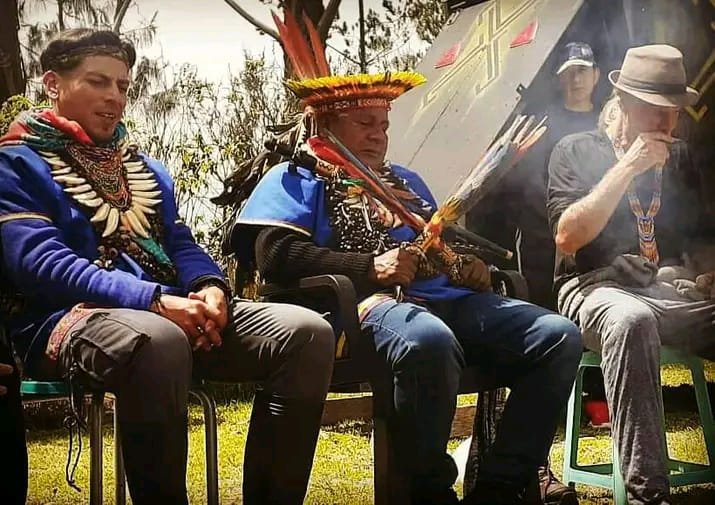
Through the rubber years and every bad year after, the taitas kept cooking the yagé vine. A ceremony that could not be held in the open was held quietly, in the longhouses, by firelight. That is why the Cofán ceremony is so intact today: it survived by being hidden, and it is offered to the world now only because the Cofán chose to offer it.

Taita Querubín

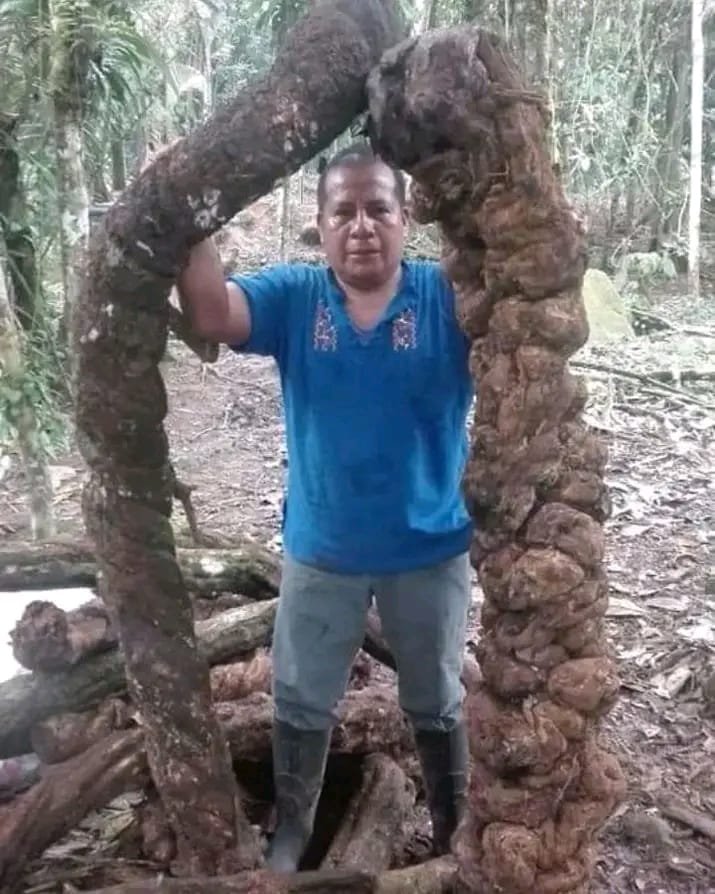
Taita Querubín Queta Alvarado was the great taita of the Cofán — the man who carried the yagé ceremony from the Putumayo to the world without ever leaving the forest behind. For more than seven decades he sang the ceremony in his community on the upper Putumayo. He treated thousands of people — indigenous and not — and asked for almost nothing. Ecuador gave him its highest cultural honors, and when he died in 2024 at an age close to a hundred — by his family's count, perhaps more — he was mourned on both sides of the border as one of the last of a generation. His family continues the lineage today, and his songs are still sung.

The river that won in court

In 2018 the Cofán community of Sinangoe discovered that dozens of mining concessions had been granted along the Aguarico river without their consent. The community organized, documented everything, and took the state to court. The courts annulled all 52 concessions, set a national precedent for free, prior and informed consent, and recognized the river itself — and the Cofán's guardianship of it — as holding rights. In 2022 the young leaders who built the case, Alex Lucitante and Alexandra Narváez, received the Goldman Environmental Prize, the world's most respected environmental award. The taitas said the river had always had rights. The courts finally agreed.

The Cofán, in our own photos

Photos from our time with the Cofán community, shared with their welcome. Photos from the Putumayo river country are coming soon.

Riverside life
Riverside life
Canoe country — every road here is water
Daily life along the river
The edge of the forest, where the community begins
Quiet hours on the river
The green wall of the western Amazon
The river that carries everything
A moment between journeys
The water that remembers

The taitas

Among the Cofán, the healer who carries the yagé ceremony is the taita. The title is earned over decades, never claimed.

Taita Querubín Queta Alvarado

The best-known Cofán taita in the world, honored by the Ecuadorian state and visited by people from every continent. He kept the ceremony in his community, charged almost nothing, and became the living bridge between the Cofán world and the outside one.

The families of the song

Behind the famous names stand lineage families who have held the yagé songs for generations — families who will not appear in books, because they were never interested in being famous. They are the ones the young taitas learn from.

The taitas of today

A new generation of Cofán taitas carries the ceremony now — in Sinangoe, Dureno and Zábalo — holding the same dietas, singing the same songs, and deciding for themselves when and how to receive outsiders. That last part is theirs to decide, and it is respected.

Yagé — the vine of the soul

Yagé is the Cofán name for the brew outsiders call ayahuasca: the yagé vine cooked with the chacruna leaf. For the Cofán it is not a drug and not a 'trip'. It is the central ceremony of a living tradition:

  • ◆The vine is harvested with permission and cooked over days by the taita and his family, with songs at every stage.
  • ◆The ceremony happens at night, in darkness, led by the taita's icaros — the healing songs that guide the entire night.
  • ◆Before ceremony there is a dieta: simple food, no alcohol, no salt-heavy meals, stillness. The preparation is part of the medicine.
  • ◆The purpose is healing and knowledge — of the body, of the family's history, of the forest. The Cofán describe yagé as a teacher, not an experience.

The Cofán today

The Cofán are not a memory. They are one of the most organized and effective indigenous peoples in the western Amazon — and they are writing their own next chapter.

Guardians of the headwaters

After the Sinangoe victory, the community leads patrols of their rivers and forests, keeping gold mining out of the headwaters that feed the entire region's water.

The language comes home

A'ingae is taught again in the communities. Elders record the old words; children grow up hearing both the river's language and the country's.

Visitors on Cofán terms

Some communities receive small numbers of visitors for ceremony and cultural exchange — on their schedules, with their rules, and with the proceeds staying in the community. Nothing else is accepted.

Two flags, one people

The border splits the Cofán between Ecuador and Colombia, but family ties cross it daily. The Putumayo unites what the maps divide.

The bridge-builders

Randy Borman, born in the Cofán community of Dureno to American missionary parents and raised A'i, spent his life building roads between the Cofán world and the outside one — bilingual schools, land titles, health programs — and died in 2025 as one of the community's most trusted voices. The work of telling the Cofán story honestly goes on.

How the lineage is kept

A Cofán taita is not appointed. A young person shows signs — steady hands, true dreams, patience around fire — and an elder taita takes them on. Then come the dietas: months in the forest with the vine and its companion plants, simple food, silence, and the slow learning of the songs. The songs are the archive. Every generation of the lineage lives inside them, and when a taita sings, all the generations sing together. That is why the ceremony survived the rubber years: it was never written down to be burned. It was carried in people.

Walk into this story

If the Cofán world is calling you, start with a free 20-minute call. We will tell you honestly what is possible, what is respectful, and what it costs — in money and in preparation.

Book a free navigation call

Educational and coordination service only. Not medical advice, and not a substitute for a qualified healthcare professional.